Extreme-scale laboratory
From the Moon to a supermassive black hole.
The same responsive canvas now handles human heights, buildings, planets, and million-kilometer references without generating billions of ruler ticks or breaking the board.

Zoom
Move
Adaptive ruler
Units change with the subject scale
The ruler uses centimeters and feet for people, meters for structures, and compact kilometers and miles for astronomical dimensions. Tick spacing is calculated from a 1/2/5 sequence so the board stays fast at every magnitude.
Reference note
Illustrative, not a telescope image
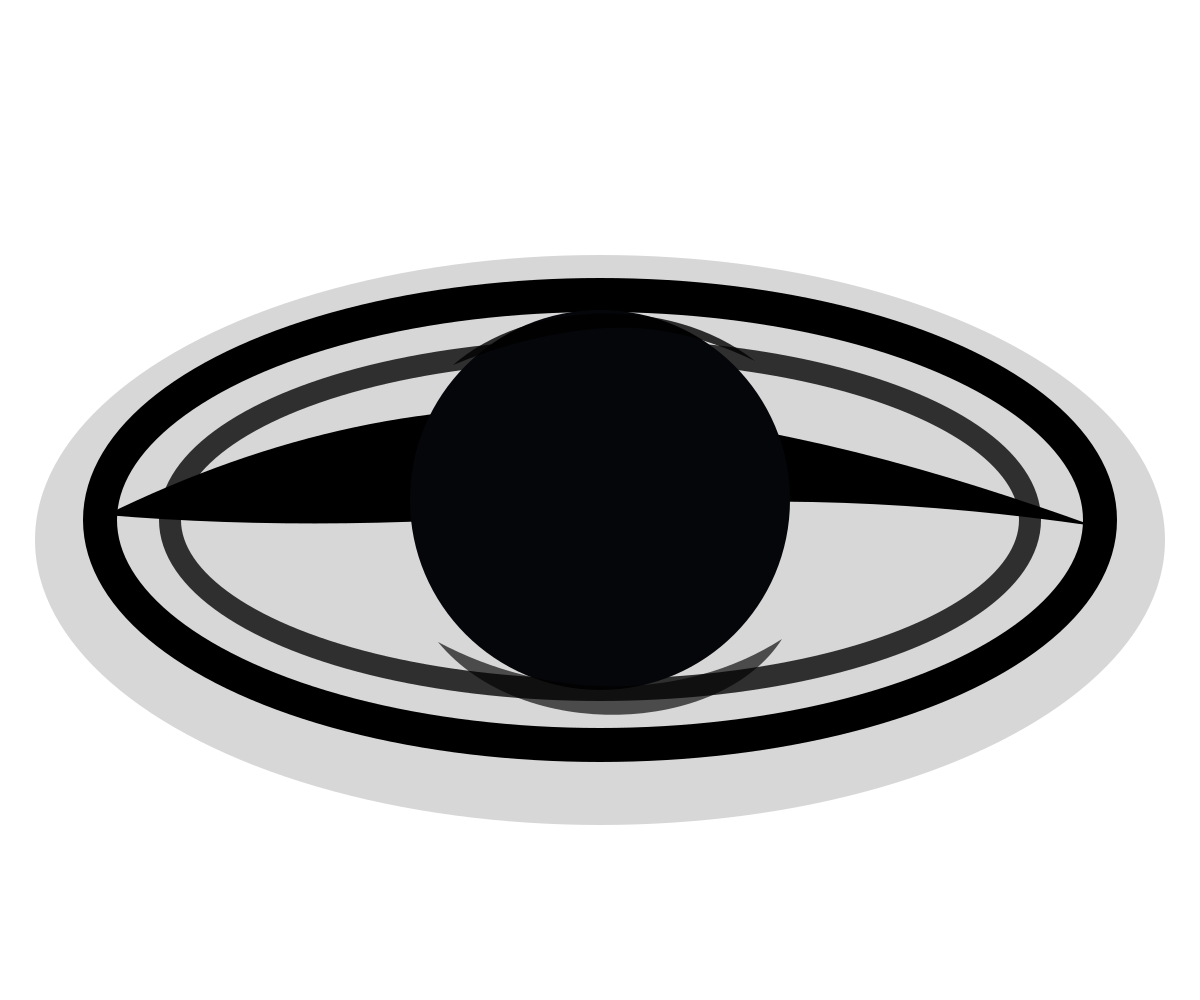
The black-hole mascot is an original diagram. The 25.4 million km value is an illustrative event-horizon diameter reference used for visual scale, not the size of the accretion disk or an observed image.
IN-DEPTH ANALYSIS & METROLOGY
Extreme Scale Comparison: From Quarks & DNA to Planets, Stars & Black Holes
Compare the Moon, Earth, Jupiter, the Sun and an illustrative black-hole diameter on a linear ruler, with background on dimensions and scale.
01 1. The Problem of Scale: Why Linear Rulers Fail Beyond Everyday Life
A linear ruler gives equal screen space to equal distances. That makes diameter ratios easy to compare, but the smallest object can become too small to see when a much larger one shares the view. This board starts with the Moon, Earth, Jupiter, the Sun and an illustrative Sagittarius A* event-horizon diameter; remove larger subjects to inspect the smaller ones.
The board rescales its linear ruler to fit the selected subjects and switches the unit labels for larger dimensions. It does not provide a logarithmic mode or presets for Planck-length objects and galaxies. A logarithmic diagram is a different approach: equal intervals represent equal multiplicative changes, so its displayed shapes cannot be read as ordinary linear size ratios.
02 2. Reading the Diagram: Size, Dimension and Distance
The planetary values on this page describe diameters, while a person or building is usually described by standing height. An animal or ship may instead be represented by its length. Always check the subject label before interpreting the shared ruler: equal displayed spans mean equal selected dimensions, not equal shape, mass or volume.
Objects share a baseline so their selected dimensions can be compared. Their horizontal placement does not show orbital spacing or distance from Earth. The icons are illustrative drawings, and the black-hole symbol is not a telescope image or a diagram of its surrounding accretion disk.
03 3. Macro Engineering and Living Giants: Humans, Whales & Megastructures
At the macroscopic terrestrial scale, the Blue Whale represents the apex of biological mass, stretching up to 30 meters (98 ft) in length. Human architectural triumphs quickly dwarf biological life: the historic RMS Titanic was 269.1 meters (882 ft) in length, which is nearly nine times longer than an adult blue whale.
The Great Pyramid of Giza stands at 138.8 meters, the Eiffel Tower reaches 330 meters, Taipei 101 commands 508 meters, and the Burj Khalifa in Dubai pierces the clouds at 828 meters (2,717 ft). Placing a human silhouette next to these structures illustrates the exponential leap from biological organisms to monumental civil engineering.
04 4. Astronomical and Cosmic Horizons: From the Moon to Sagittarius A*
The preset uses approximately 3,474.8 km for the Moon, 12,742 km for Earth, 139,820 km for Jupiter and 1.39 million km for the Sun. Dividing those displayed values gives Jupiter about 11 Earth diameters and the Sun about 109 Earth diameters. A diameter ratio is a linear comparison, not a volume or mass ratio.
Sagittarius A* is represented here by an illustrative 25.4 million km event-horizon diameter. Treat this as a chosen scale reference, rather than a direct measurement of the pictured icon. The event horizon, an observed bright ring and the surrounding accretion disk describe different things and should not be interchanged.
FREQUENTLY ASKED QUESTIONS
Common Questions & Authoritative Answers
What is an extreme scale comparison? +
It places selected object dimensions on a shared ruler. This page opens a linear comparison of the Moon, Earth, Jupiter, the Sun and an illustrative Sagittarius A* event-horizon diameter.
How large is the Earth compared to Jupiter and the Sun? +
Using the preset values, Earth is about 12,742 km across, Jupiter about 139,820 km, and the Sun about 1.39 million km. Jupiter is therefore about 11 Earth diameters across, and the Sun about 109.
Can I inspect the smaller planets without the black-hole reference? +
Yes. Remove the larger subjects from the board so the ruler can fit the remaining figures more closely. The ruler remains linear as the view changes.
What does the Sagittarius A* size represent? +
The preset uses an illustrative 25.4 million km event-horizon diameter. It does not show the size of an accretion disk, the observed bright ring, or the distance to the black hole.
Does this tool use logarithmic scaling? +
No. It uses a linear ruler with adaptive unit labels. Logarithmic diagrams instead assign equal space to equal multiplicative changes; they are useful for comparing orders of magnitude but do not preserve ordinary linear shape ratios.
Does the diagram show distances between planets? +
No. It compares dimensions on one shared baseline. The subjects' horizontal spacing is a layout choice and does not represent their orbital distances.